Risk shape
Pro classifies the change as UI + data + deploy + contract instead of calling it a generic code diff.
Impact surfaces: ui, data, deploy, contract
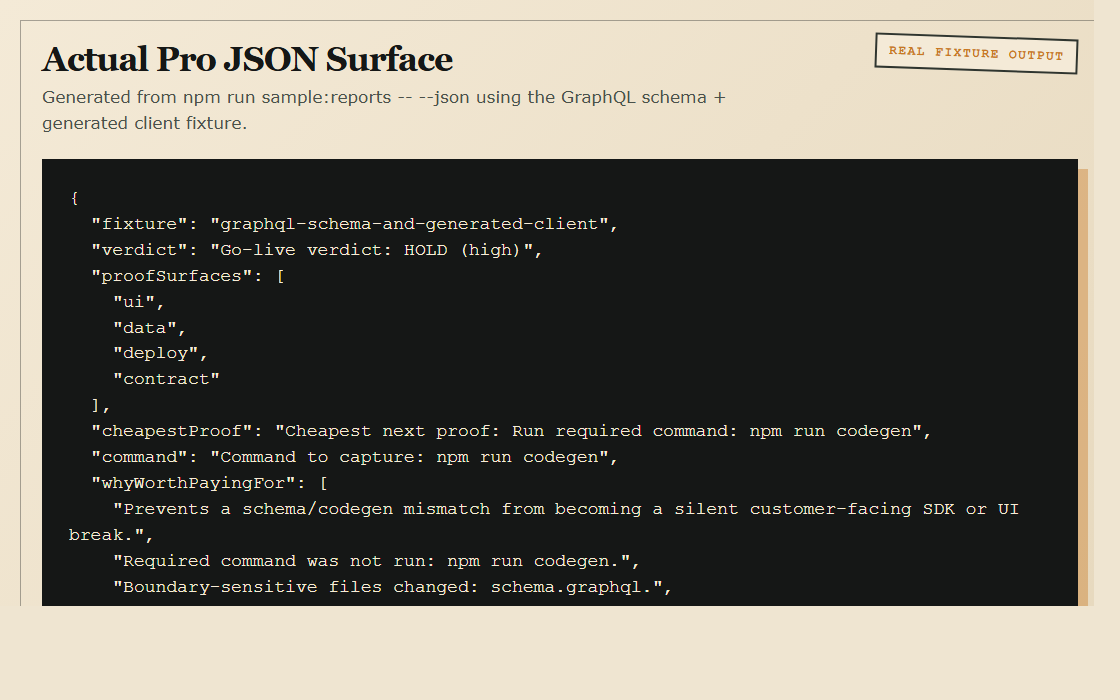
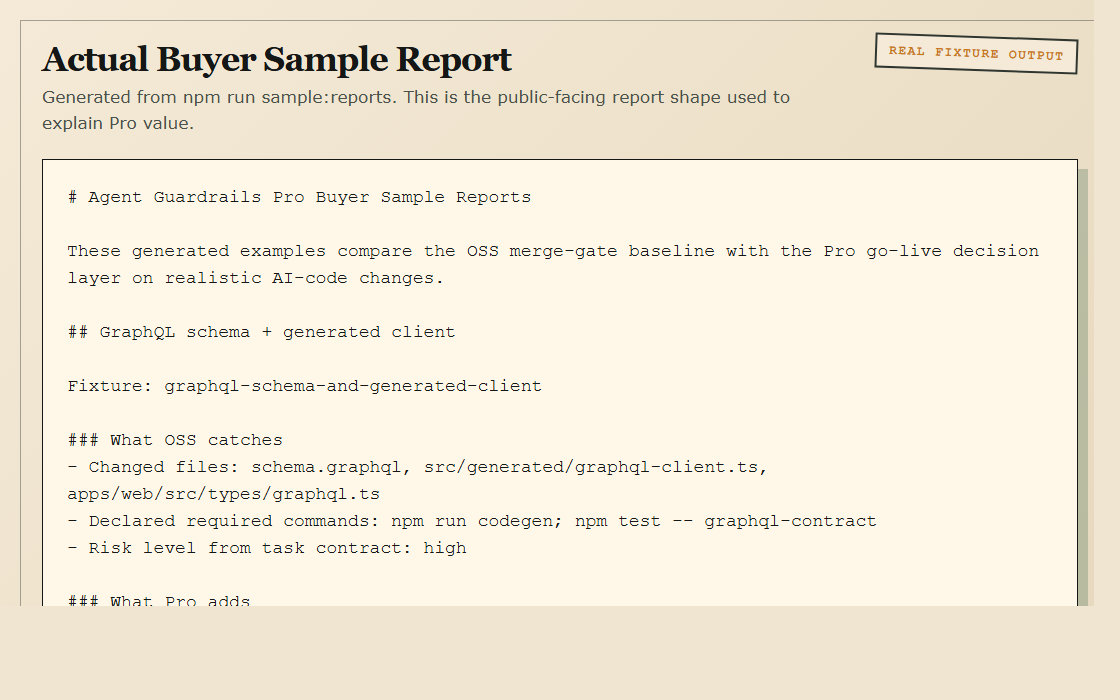
This demo uses actual project fixture output. Pro does not ask users to hunt through JSON. It gives a ship/no-ship answer first, then shows the proof that would change the decision.
agent-guardrails check --json
agent-guardrails pro report
agent-guardrails pro workbench --open
JSON is still available for CI, agents, and audit trails. The human workflow starts with the decision, the reason, and the smallest useful next action.
The fixture touches GraphQL schema, generated client output, and web type surfaces. The gate is holding because a generated-code proof is missing.
npm run codegen, capture the output, then rerun the gate.The user should not need to inspect a raw memory file. The product has to say what happened, why it matters, and what to do next.
Pro classifies the change as UI + data + deploy + contract instead of calling it a generic code diff.
The verdict is HOLD because required codegen proof and deploy evidence are missing.
The next action is not "write more tests"; it is the smallest command likely to close the first proof gap.
After evidence is supplied, Pro remembers the proof recipe and produces a report a human can trust later.
These captures were generated from the repository's real fixture engine. The Workbench is the human surface; JSON and Markdown stay available for agents, CI, and audit trails.
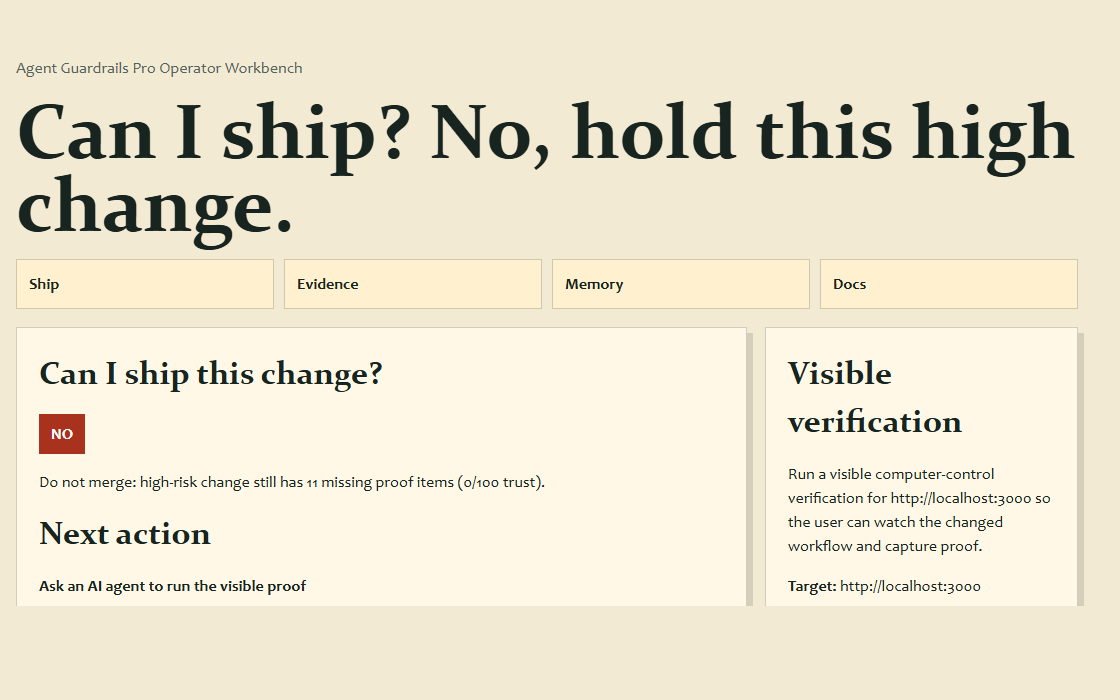
Not yet. The sample fixture is still missing codegen, contract, and deploy proof. The report explains what OSS catches, what Pro adds, and why the missing proof matters.
The value is not a one-off checklist. Pro stores the evidence patterns that closed prior gaps, downweights stale recipes, and makes future release decisions more project-specific.
Find the risky surface and ask for proof that matches the actual changed files.
Recognize the same surface and recommend the command that previously worked.
Show a trust receipt with accepted evidence, remaining gaps, and the next safe action.